
Guide
Due dates are not do dates
A list can tell you that something is due on Thursday. It still has no idea when you will do it. That gap is why a full list and an empty afternoon show up on the same day.
The deadline is a constraint
A due date answers “when is this too late?” It is a real constraint, and it should stay visible. It is not a plan. If five things are due on Friday and Friday is already a run of meetings, the list has not failed at remembering. It has failed at placing the work.
The do date is the plan
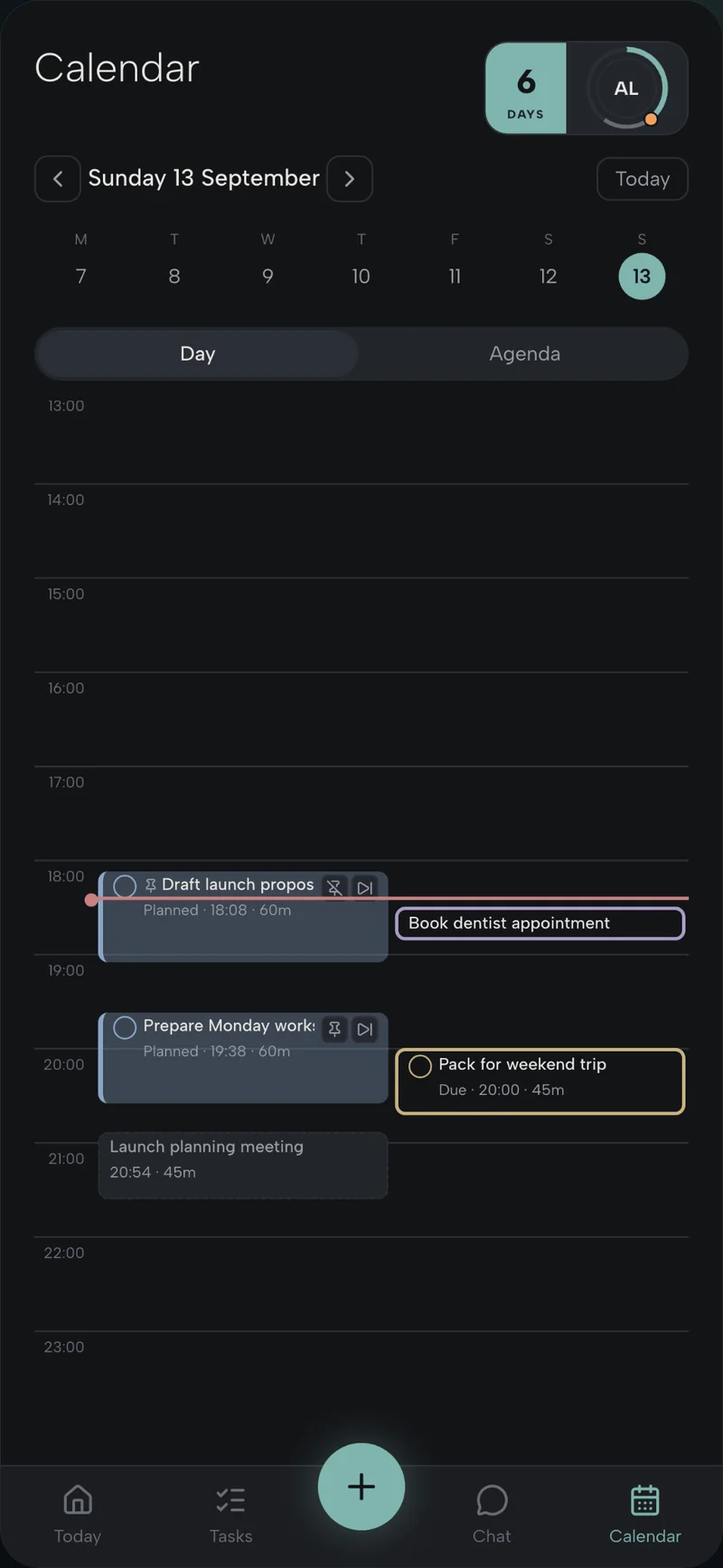
A do date is the hour you will actually spend. It has to sit in time you have: work hours, an evening, a weekend window, and the gaps beside the calendar you already keep. Planned work sits next to a meeting, not on top of it. If the week will not fit, you should see that before Friday, not during it.
How Deflective uses both
You capture the task, including the deadline if it has one. Deflective drafts a do date inside the hours you set. You approve the draft. Nothing moves in the background. Skip, defer or pin a block, then ask for another draft when the week changes. The deadline does not disappear because the timetable moved.
Today then turns that week into a sequence: what is Now, what is next, and what can wait. The question is “what deserves this hour?”, not “which row is boldest?”.
Try it on a real week
Plus is £6 a month after seven days, and the trial does not ask for a card. The details are on pricing. The iPhone app, and the browser if you would rather not install anything, are on download. If you are comparing the paid planners that try to place the week for you, start with the scheduling apps page or the Motion alternative.
Deflective Plus is £6 a month after a seven-day trial with no card. Checked on deflective.co.uk/pricing on 12 October 2026.
Start free 7-day trial